
Surprising statistic: a large share of DeFi losses are not from stolen private keys but from users approving a single malicious contract that later drains multiple tokens. That counterintuitive fact flips the common mental model—security in browser wallets is no longer just about secret-keeping, it is about transaction semantics, policy enforcement, and simulation. This article untangles the mechanisms behind transaction simulation, explains how multi‑chain wallets change the attack surface, and offers decision-useful heuristics for US users evaluating browser-extension wallets for advanced DeFi flows.
Briefly: browser-extension wallets sit at the intersection of UX, on‑chain state, and local policy. The choices a wallet makes about preflight analysis, transaction simulation, and multi‑chain UX change what typical users can catch before signing. We’ll bust three common misconceptions, compare three defensive approaches, highlight a practical framework for risk decisions, and point to signals worth watching in the near term.
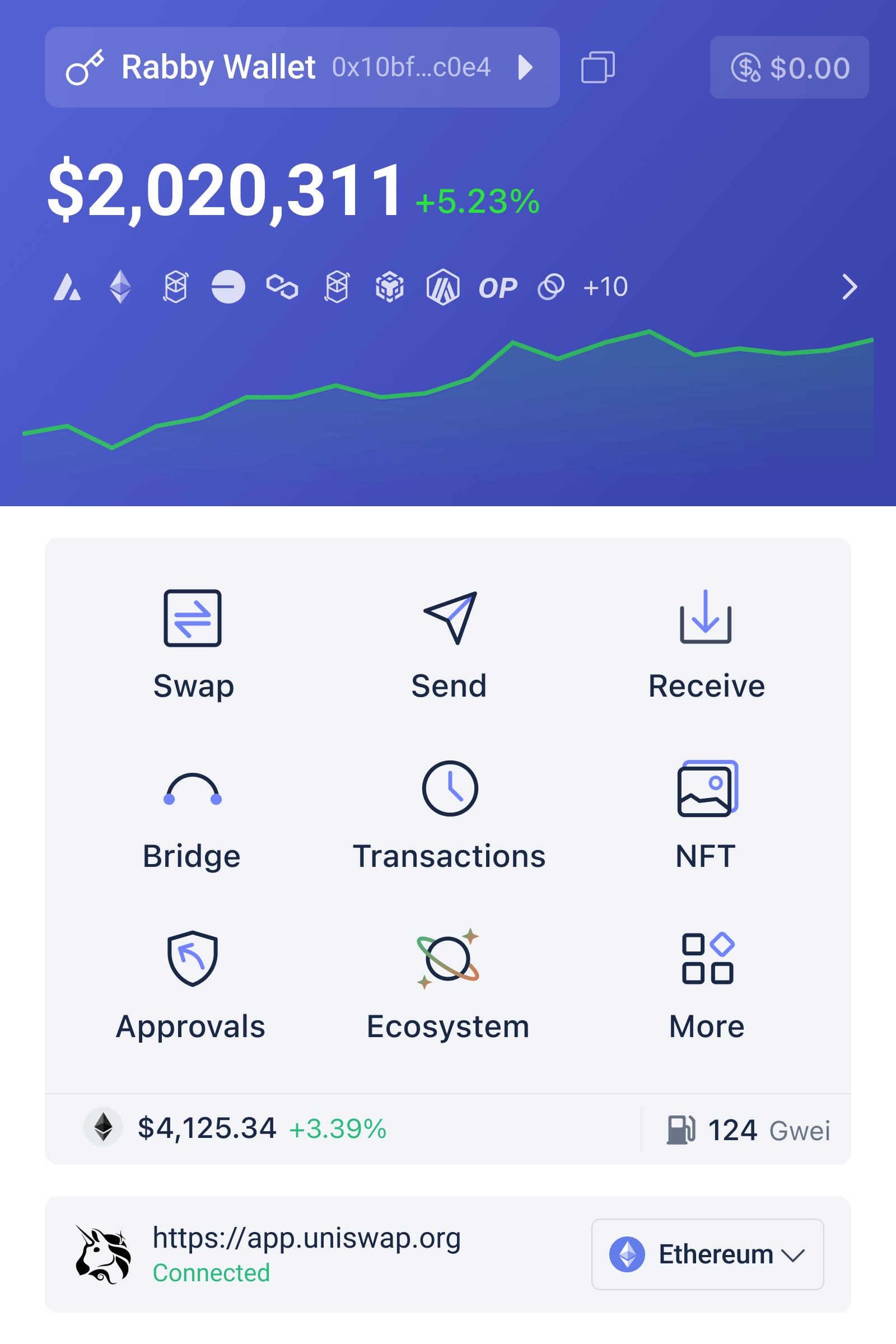
How transaction simulation works (and why it catches errors humans miss)
At core, transaction simulation is a dry run: the wallet asks a node or an execution engine to apply the transaction to current chain state and report the result without committing it. Mechanistically this can reveal failed transfers, gas estimation mismatches, and unintended contract behavior like token approvals or reentrancy paths. The added value is behavioral insight—seeing what a contract call would do before you pay gas.
This matters because modern DeFi calls are composable: a single approval can unlock many downstream actions executed later by another actor. Simulation surfaces the immediate effects and sometimes the subsequent internal calls (if simulated deeply). However, simulations have limits: they depend on current node state, cannot predict off‑chain or time‑delayed triggers, and may miss MEV‑style reorderings that matter in tight arbitrage flows. So simulation lowers, but does not eliminate, risk.
Three common misconceptions — and the corrected view
Misconception 1: “If my seed phrase is safe, I’m safe.” Correction: protecting your private key prevents direct theft, but most large DeFi losses occur when users sign transactions that grant contracts blanket permissions. The attacker leverages your consent, not the seed phrase. Defenses therefore require richer transaction inspection and permission granularity.
Misconception 2: “All extensions are the same; pick the most popular.” Correction: popularity says little about feature set. Some extensions focus on minimal UI and portability; others, aimed at power users, add pre‑transaction security analysis, multi‑chain UX adjustments, and deep simulations. The trade-off is complexity versus safety: richer tools demand more user attention and understanding, but can catch attacks a plain wallet would not.
Misconception 3: “Simulation is foolproof.” Correction: simulation is a probabilistic, environment‑dependent check. It can miss front‑running, oracle manipulation, or cross‑chain relay risks. Treat simulation as a risk attenuator, not a guarantee.
Three defensive approaches compared — trade-offs and fit
1) Minimalist wallet (low surface, few features). Pros: less UI clutter, smaller attack codebase. Cons: no preflight checks, coarse approvals, harder to manage multi‑chain flows. Best for: casual on‑chain activity and users who avoid complex DeFi interactions.
2) Policy‑centric wallet (permissions manager + approval policies). Pros: enforces fine‑grained allowances, prevents blanket approvals by default, better for recurring integrations. Cons: usability friction, possible false positives requiring overrides. Best for: regular token holders who interact with DEXs and bridges.
3) Simulation‑heavy wallets (preflight simulation, gas sanity checks, multi‑chain context). Pros: reveals likely outcomes, estimates failed calls, displays internal calls. Cons: simulation can be slow, depends on node fidelity, and still cannot show off‑chain events. Best for: power users, arbitrageurs, and anyone doing multi‑contract sequences across chains.
Example: a wallet that combines a policy manager with selective simulation can prevent careless blanket approvals while simulating higher‑risk interactions. That hybrid reduces both human error and technical blind spots at the cost of added UI and occasional blocking prompts.
Why multi‑chain changes the calculus
Multi‑chain DeFi means the same user identity (address or linked accounts) interacts with different runtime semantics, gas tokens, and bridge relays. Cross‑chain operations introduce new failure modes: message relays that delay finality, wrappers that modify approvals, and contract versions that behave differently across chains. A wallet that understands multi‑chain context can tailor warnings—e.g., warn about approving on an L2 bridge contract versus a canonical ERC‑20 on Ethereum mainnet.
This week’s project update emphasized that some wallets now offer better multi‑chain UX and transaction simulation specifically for power users. That is an incremental but important shift: as user attention becomes the scarce resource, wallets that push relevant, context‑aware signals can reduce costly mistakes. Still, interoperability creates state heterogeneity: simulation on one chain won’t predict oracle manipulations on another; cross‑chain risk remains an unsolved, active problem.
Decision framework: how to choose and configure a browser-extension wallet
Here is a practical heuristic you can reuse when selecting or configuring a wallet for multi‑chain DeFi:
Step 1 — Define your activity profile: casual holding, trading, or composing transactions across protocols. Higher complexity demands simulation and policy tools.
Step 2 — Prioritize controls: if you execute multi-step transactions often, demand preflight simulation and an approvals manager. If you rarely interact with contracts, prefer a minimal attack surface.
Step 3 — Inspect defaults: does the wallet request blanket token approvals? Can it show internal calls? Are warnings contextual per chain? Default settings matter more than rare features because most users accept defaults.
Step 4 — Test on small amounts: use testnets or tiny mainnet amounts to confirm how the wallet reports gas, simulation results, and approval scopes. Simulations vary by node provider; empirical testing reduces surprise.
Trade-offs, limits, and the things wallets can’t fix
Even the best wallet cannot eliminate oracle manipulation, front‑running by miners/validators, or social engineering outside the signing flow (e.g., malicious contract addresses copied into a DApp’s UI). Privacy trade-offs also emerge: richer features often require more telemetry or third‑party node access to run simulations, which can leak usage patterns unless encrypted locally. A careful user weighs which risks to accept and configures the wallet accordingly.
Regulatory and legal contexts (particularly in the US) may also affect design: features that automate certain actions could invite closer scrutiny or create expectations about custody. That’s a future‑looking signal to watch: wallets will need to balance autonomy with explainability as regulators ask not only whether funds can be moved, but why a user was prompted to sign.
What to watch next — short, evidence‑anchored signals
1) Adoption of approval‑scoped standards: watch whether popular DeFi contracts and wallets adopt tools that limit ERC‑20 allowance scopes by default. If that becomes widespread, user risk from blanket approvals will decline.
2) Better simulation ecosystems: improvements in deterministic execution environments and replay systems could reduce false negatives in simulation, but this is conditional on broader node infrastructure upgrades.
3) UX‑safety convergence: wallets that surface clear, contextualized warnings without overwhelming the user will likely gain traction among power users. Adoption here is driven by measured decreases in user loss events, not marketing claims.
Where to find the wallet and verify features
If you want to examine a wallet that emphasizes pre‑transaction analysis, transaction simulation, and multi‑chain UX for power users, see this archived PDF for the rabby wallet, and then test the features in small, controlled steps on a testnet. Documentation and empirical testing are the best immediate defenses.
FAQ
Can transaction simulation prevent all smart contract exploits?
No. Simulation reduces specific classes of mistakes—failed calls, obvious approval overreach, and some internal call traces—but it cannot foresee off‑chain oracle attacks, time‑delayed triggers, or adversarial reordering. Treat simulation as a risk‑reduction tool, not a panacea.
Should I always disable “infinite approvals”?
As a rule of thumb, avoid infinite approvals for tokens you use often unless you accept the elevated risk and understand the counterparty. A middle path is time‑boxed or amount‑scoped approvals and using a wallet that can revoke allowances easily. The trade‑off is convenience vs. potential future authorization misuse.
Does multi‑chain mean more security problems?
Multi‑chain increases heterogeneity of execution environments and introduces bridge/relay risk, so it raises the surface area for mistakes. But it also incentivizes better UI and tooling: wallets that operate across chains tend to add context‑aware warnings and chain‑specific policies. The net effect depends on which tools users adopt.
How should a US user balance convenience and safety?
For most US users, a practical balance is to use a wallet with clear default protections (no infinite approvals, contextual warnings), enable simulation for high‑value or unfamiliar interactions, and keep small hot wallets for active trading while storing long‑term holdings in cold custody. Test features empirically on testnets before trusting the wallet in production.